
Scholarship Programmes NGO in Kolkata, India: Where Talent Is Never Silenced by Poverty
When marks are high but money is not
Every year in Kolkata, results are announced. Newspapers carry photographs of smiling students who have scored remarkably in their Secondary and Higher Secondary board examinations. Families distribute sweets when they can. Teachers call to congratulate. For a moment, achievement feels complete.
And then, quietly, reality steps in.
College admission fees. Coaching fees. Books that cost more than a month's groceries. Examination forms. Travel expenses. Laptops. Internet access. Uniforms. Study materials. For thousands of brilliant students from financially struggling families, the celebration of high marks is followed by sleepless nights. Parents calculate what they cannot afford. Students begin to consider part-time work instead of full-time education. Some never return to the classroom.
This is where a scholarship program for NGOs in Kolkata, India, becomes not just relevant but urgent.
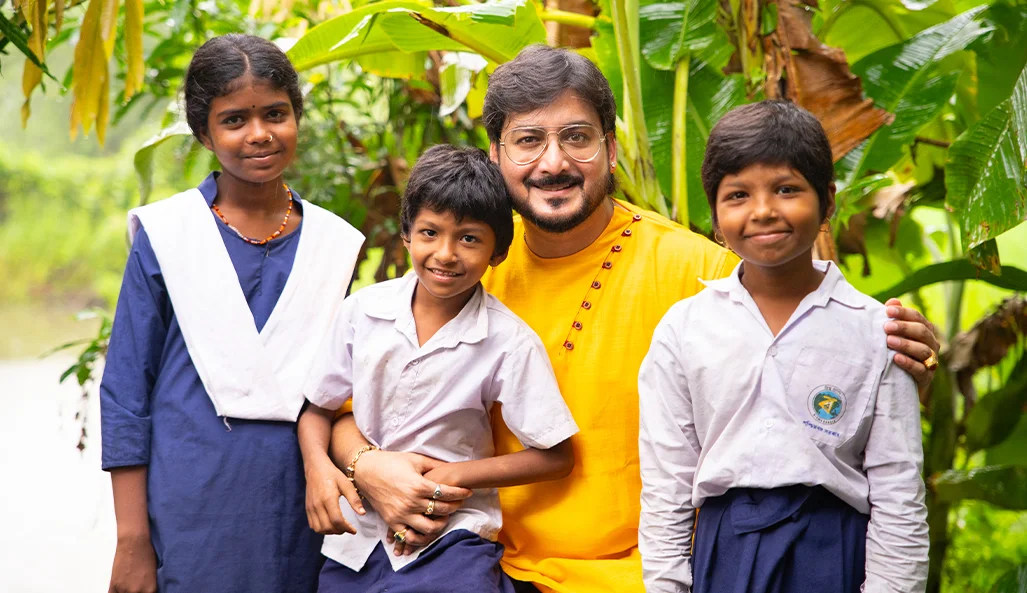
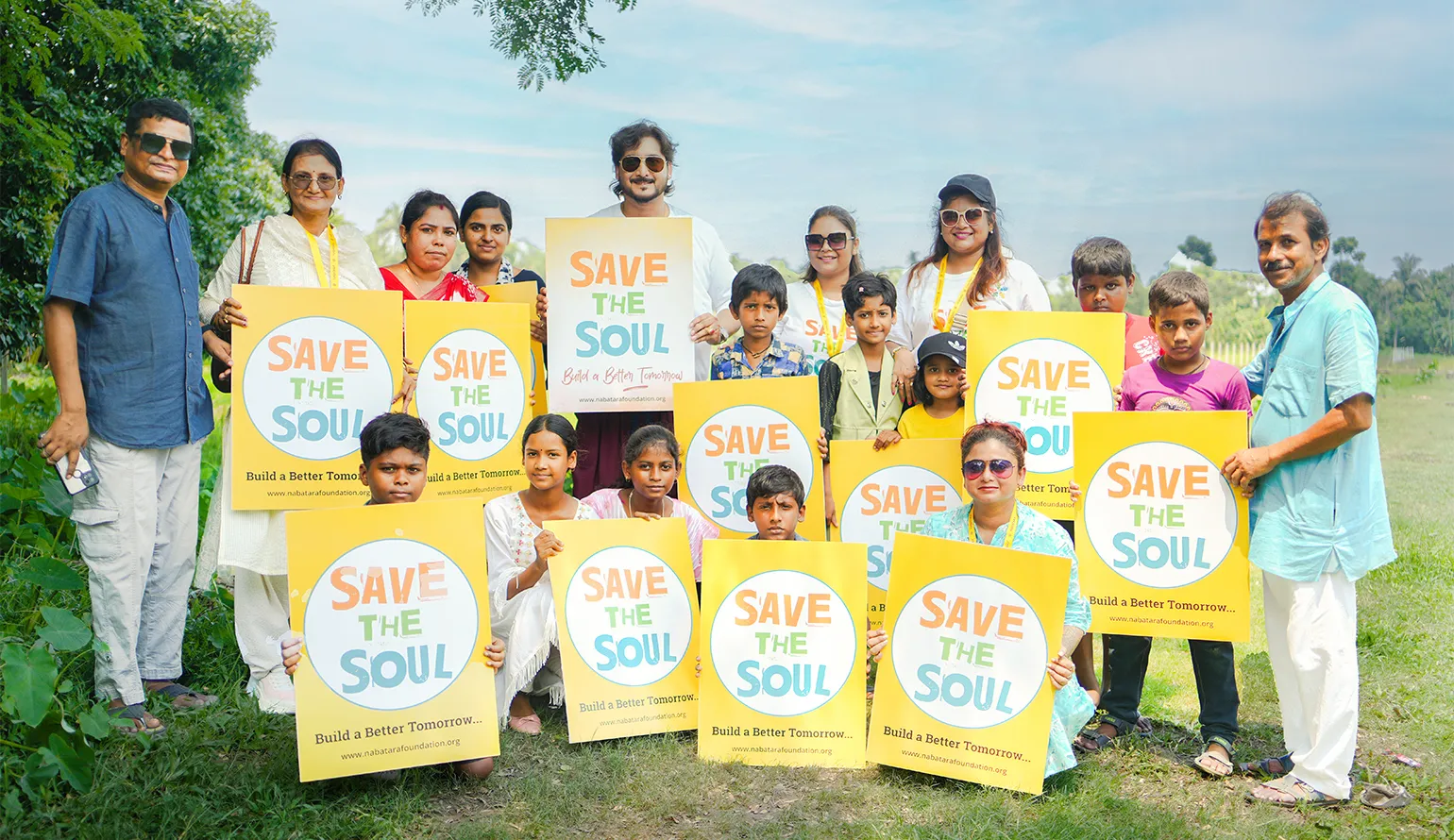
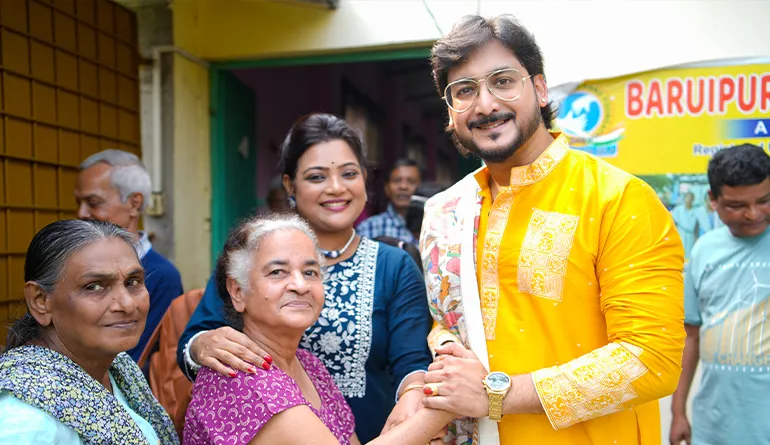
Nabatara Foundation—Save The Soul, registered under the Ministry of Corporate Affairs, Government of India as a Section 8 Company, stands at this fragile turning point in a student's life. The foundation exists for one simple but powerful reason: no talented child should be forced to abandon education because of financial hardship.
"When a deserving student is forced to stop studying, a dream is delayed and a family's hope dims. But when a scholarship steps in at the right moment, education continues, confidence rises, and an entire generation begins to change.
The growing crisis of education funding in India
India has one of the largest youth populations in the world. It is often called a demographic advantage. But potential alone does not create opportunity. Education does. And access to education is not equal.
Government schools produce bright minds every year. Students in Kolkata and across West Bengal compete fiercely in board examinations. Many score above expectations, often studying in difficult home environments. Yet when higher education demands fees, resources, and tools, the gap between merit and money becomes painfully visible.
The cost of textbooks alone has increased steadily. Entrance exam preparation requires additional materials. Digital education has become standard, making access to devices and connectivity essential. Families who survive on daily wages or small incomes struggle to keep pace. In such a landscape, a scholarship NGO Kolkata initiative is not charity; it is structural support for merit.
Nabatara Foundation recognizes that education is not just an individual achievement. When one student drops out, an entire family's upward mobility is interrupted. When one student continues, siblings follow, parents gain security, and communities change quietly over time.
The foundation behind the mission
Nabatara Foundation "Save The Soul" operates with legal registration and accountability under Section 8 of the Companies Act, 2013. This is not an informal charity effort. It is a structured, transparent organization built on documented processes and compliance under MCA (Government of India).
As a scholarship program NGO in Kolkata, India, the foundation focuses specifically on students who have demonstrated academic excellence in secondary and higher secondary examinations but face financial barriers to continuing their education.
The foundation does not select beneficiaries casually. Academic records are reviewed. Financial background is assessed with sensitivity and respect. Teachers and local references help identify genuine need. The goal is not to create dependency but to remove obstacles.
More than a check: what scholarship support truly means
When people hear the word "scholarship," they often imagine a single financial grant. In reality, the needs of an underprivileged student are layered.
Nabatara Foundation provides direct financial scholarships to support admission fees and academic continuation. But the work of an NGO providing educational scholarships in India cannot stop there.
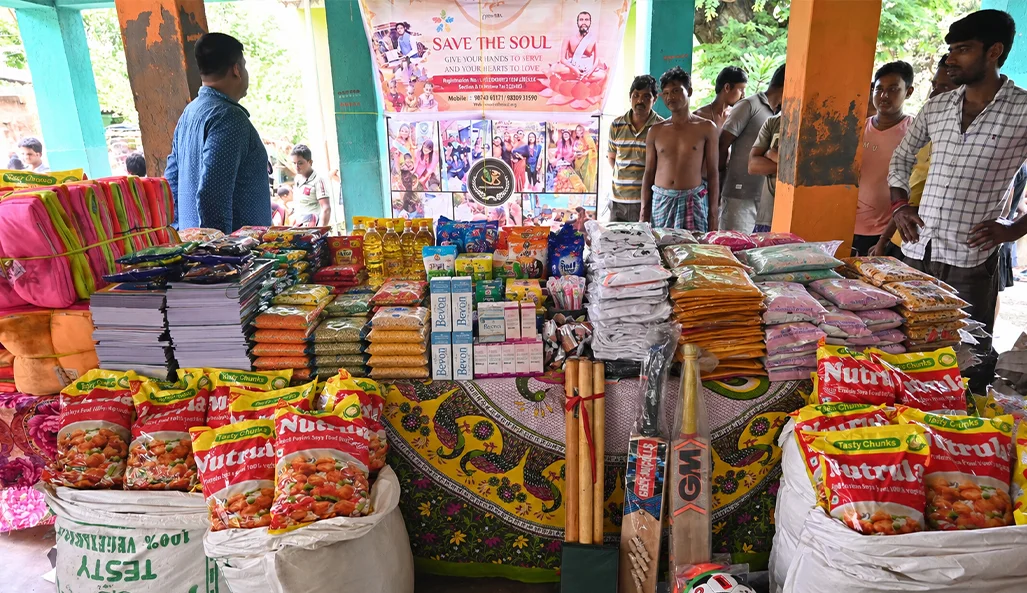
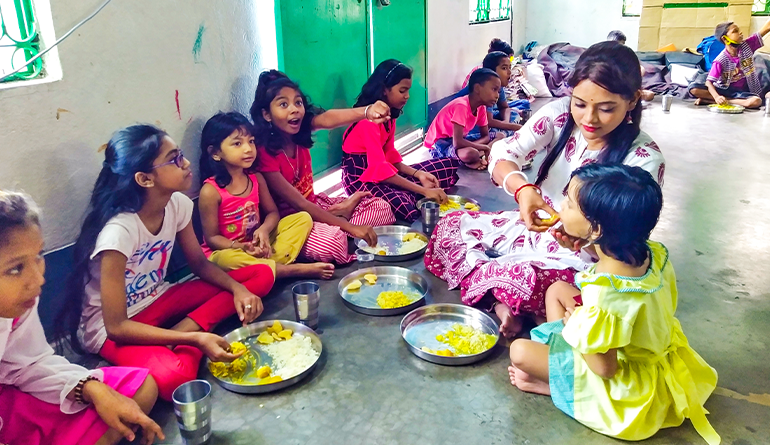
Students require textbooks that align with updated curricula. They need notebooks, pens, geometry boxes, and examination materials. Many require school bags, uniforms, and sometimes digital learning tools. College students may need laboratory equipment or subject-specific reference books that are expensive and difficult to source.
By supplying educational essentials alongside financial support, this scholarship program for NGOs in Kolkata, India, ensures that students are not academically stranded after receiving initial assistance.
The emotional weight carried by first-generation learners
Many beneficiaries of the student scholarship NGO Kolkata program are first-generation learners. Their parents may not have completed school. Some cannot read. Yet they recognize the power of education because they have lived without it.
In modest homes across Kolkata's lanes and nearby rural pockets, parents wake early to work long hours, holding onto one belief: their child's education will create a different future. When financial hardship threatens that belief, despair is not loud. It is quiet. It shows in conversations that end mid-sentence.
A scholarship letter from Nabatara Foundation does more than cover fees. It restores confidence to parents who feared they had reached a dead end. It tells a student that hard work has been seen.
This is why the foundation is increasingly recognized as one of the best scholarship NGOs in Kolkata. Not because of scale alone, but because of sensitivity.
Education as family transformation
When a student from a low-income household enters college, the impact radiates outward. Younger siblings study harder. Neighbors begin to believe education is achievable. Extended family members reconsider early marriage decisions for daughters. The entire environment shifts.
An education support NGO in India must understand these ripple effects. Scholarships are not isolated acts; they are long-term investments in family dignity.
In several cases supported by the Nabatara Foundation, scholarship recipients have gone on to pursue professional degrees, vocational training, and competitive examinations. Some have become teachers. Others have entered technical fields. A few have returned as volunteers to support the next generation of students.
Such cycles of return define the quiet power of a scholarship program's NGO in Kolkata, India.
Transparency that builds donor confidence
Global donors and CSR partners require assurance that contributions reach real students. As a Section 8 Company registered under MCA, Nabatara Foundation maintains documented records of scholarship distribution, beneficiary verification, and impact tracking.
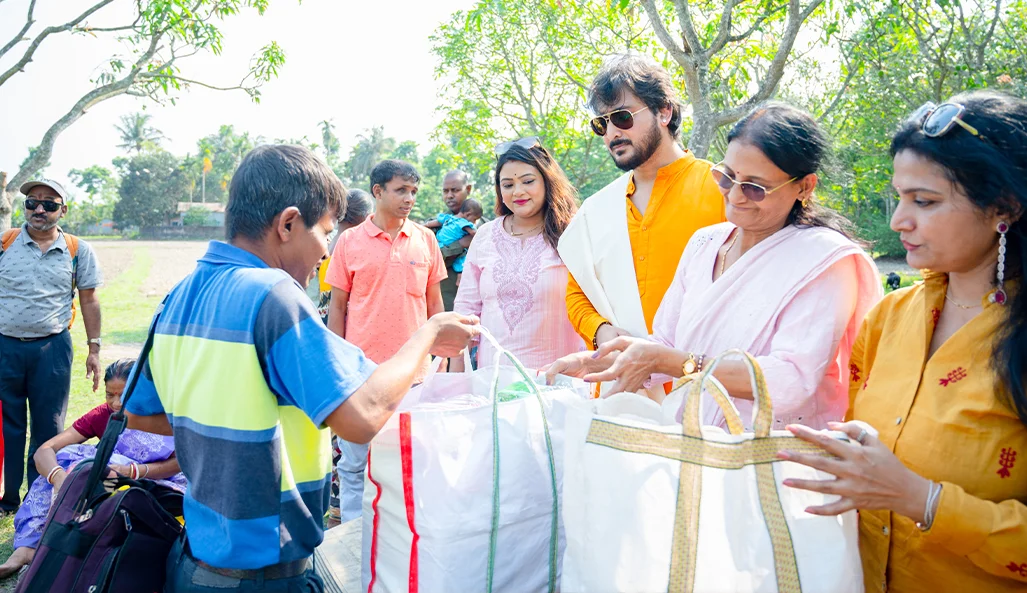
Donors who choose to donate for student education in India through this foundation receive clarity on how funds are allocated. Scholarships are tied to identifiable students with academic merit. Educational materials are distributed through organized channels. Administrative processes are designed to prevent misuse.
Transparency is not a marketing statement here; it is operational discipline.
Why Kolkata requires targeted scholarship intervention
Kolkata has long been known for its intellectual heritage. From literature to science, the city has produced thinkers and leaders. Yet beneath this legacy, there are thousands of students navigating financial stress.
Urban poverty intersects with educational aspiration in complex ways. Families living in rented accommodations face rising living costs. Migrant labor families struggle with irregular income. Single-parent households often prioritize immediate survival over long-term education.
An NGO for underprivileged students in Kolkata must respond with contextual understanding. Nabatara Foundation works closely with local educators and community leaders to identify deserving candidates, ensuring that support is timely and relevant.
The responsibility of corporate India
CSR scholarship programs in India have become an important avenue for corporate engagement in social development. Companies seeking meaningful CSR investment recognize that funding education yields measurable and lasting outcomes.
By partnering with Nabatara Foundation's scholarship programs, an NGO in Kolkata, India, corporate houses can directly sponsor high-performing students from disadvantaged backgrounds. Impact reports, academic progress tracking, and structured documentation allow CSR partners to align business responsibility with human growth.
Education support does not produce instant publicity. It produces sustained change. For responsible corporations, this alignment is invaluable.
Volunteers who mentor, not just donate
Financial support is essential, but mentorship amplifies impact. Volunteers associated with Nabatara Foundation often provide guidance to scholarship recipients. They help students navigate college admissions, career options, and exam preparation strategies.
For many underprivileged students, exposure is limited. Having a mentor who explains pathways, scholarship exams, internships, and professional etiquette bridges invisible gaps.
An education charity in Kolkata must therefore think beyond funding. It must build networks of encouragement.
Stories that define the program
There is the story of a girl who scored exceptionally in her higher secondary exams but faced pressure to begin earning immediately. Her father, a daily wage worker, could not afford college admission fees. Through the scholarship programs of the NGO in Kolkata, India, the initiative of the Nabatara Foundation, her admission was secured. Books were provided. Today she continues her studies with renewed determination.
There is the story of a boy from a single-parent household who ranked high in board examinations but lacked funds for entrance coaching materials. The foundation provided both scholarship funds and study materials. His performance improved further. He now aspires to competitive examinations.
Such stories are not isolated. They represent a consistent pattern where timely intervention prevents permanent dropout.
Education funding as preventive social action
When students discontinue education due to financial strain, long-term social consequences follow. Underemployment rises. Early marriages increase in certain communities. Youth frustration grows.
Supporting a scholarship program for NGOs in Kolkata, India, is therefore preventive social work. It addresses inequality before it deepens.
Education is one of the few interventions that compound over time. The return is not financial alone; it is social stability.
An invitation to global donors
If you are reading this from outside India, you may wonder how your support matters here. It matters profoundly. Exchange rates often allow international donors to fund entire annual scholarships that change a student's trajectory.
To donate for student education in India through the Nabatara Foundation is to directly alter a future. A contribution that may seem modest globally can secure books, admission fees, and study resources for a high-performing student who would otherwise pause education indefinitely.
Sustaining belief in merit
Merit without opportunity becomes discouragement. Opportunity without merit becomes imbalance. A scholarship program for an NGO in Kolkata, India, must align carefully.
Nabatara Foundation's approach ensures that academic effort is recognized and supported. Students who have proven their commitment through examination results receive backing that validates hard work.
In a society where talent exists across economic lines, such validation is powerful.
Building credibility in a competitive NGO landscape
The field of NGOs providing educational scholarships in India is competitive. Many organizations operate nationally. Some operate internationally. For Nabatara Foundation, credibility rests not in scale claims but in documented impact, community trust, and legal compliance.
Registered under MCA. Operating transparently. Working locally. Reporting clearly. These are pillars of trust.
For donors comparing options, these foundations matter.
The deeper purpose
At its core, this scholarship program for NGOs in Kolkata, India, stands for continuity. It ensures that exam results lead to admission letters. That admission letter leads to degrees. That degree leads to stable livelihoods. That livelihoods lift families.
Education is not a slogan here. It is a lived necessity.
And when a student from a financially struggling home steps into a college classroom without fear of unpaid fees, that moment carries the weight of collective support.